
BRC 350
By Melissa Stanley
Tyler Perry is an award-winning filmmaker and television Producer, Director, Actor and Writer with multiple melodramas, thrillers and comedy credits that has thrilled audiences for over 20 years. Although he is one of the most successful black creators in the media industry, there isn’t a lack controversy on how he represents black women in his films. In many of his movies there are several story lines going on, In Madea’s Homecoming the family is celebrating their grandsons College graduation, who is gay and wants to come out to his family, who already know he is gay. Another story line going on is one of the main characters is a prostitute struggling with drug addiction because of being ganged raped in college. This character then has a surprise meeting with one of her childhood friends, who is now a successful lawyer. In the end they end up together, while her attorney is engaged to her childhood friend, her lawyer is very narcissistic and illegally tries to add more time on her client’s prison sentence. Tyler Perrys films depict Black women with controversial characters such as selfish, narcissistic, drug addicted and prostitutes’ while his movies are proclaimed to strengthen and empower women; his Madea tropes support the demeaning characters that are being featured in his films.
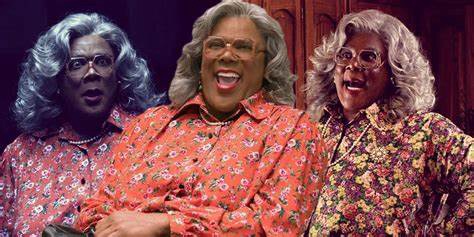
Madea’s Homecoming representation of black woman:
- Struggling
- Abused
- Loud
- Broken
- Single
- Drug Addict
- Poor
- Crazy
- Ignorant
- Criminal
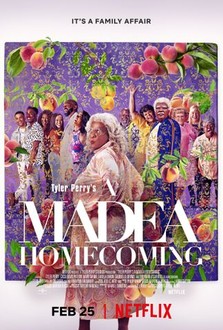

Madea’s storylines often start out with a struggle, Mabel “Madea” Simmons is the protagonist and the matriarch of the Madea movies with 3 kids and married 9 times. Madea was a stripper to support her family and her legal woes. In Madea’s Homecoming (2022) she meets her grandson’s relatives that came all the way from Ireland, and they get into an argument about whether her guest just called her a “nigger” instead of saying “knickers.”
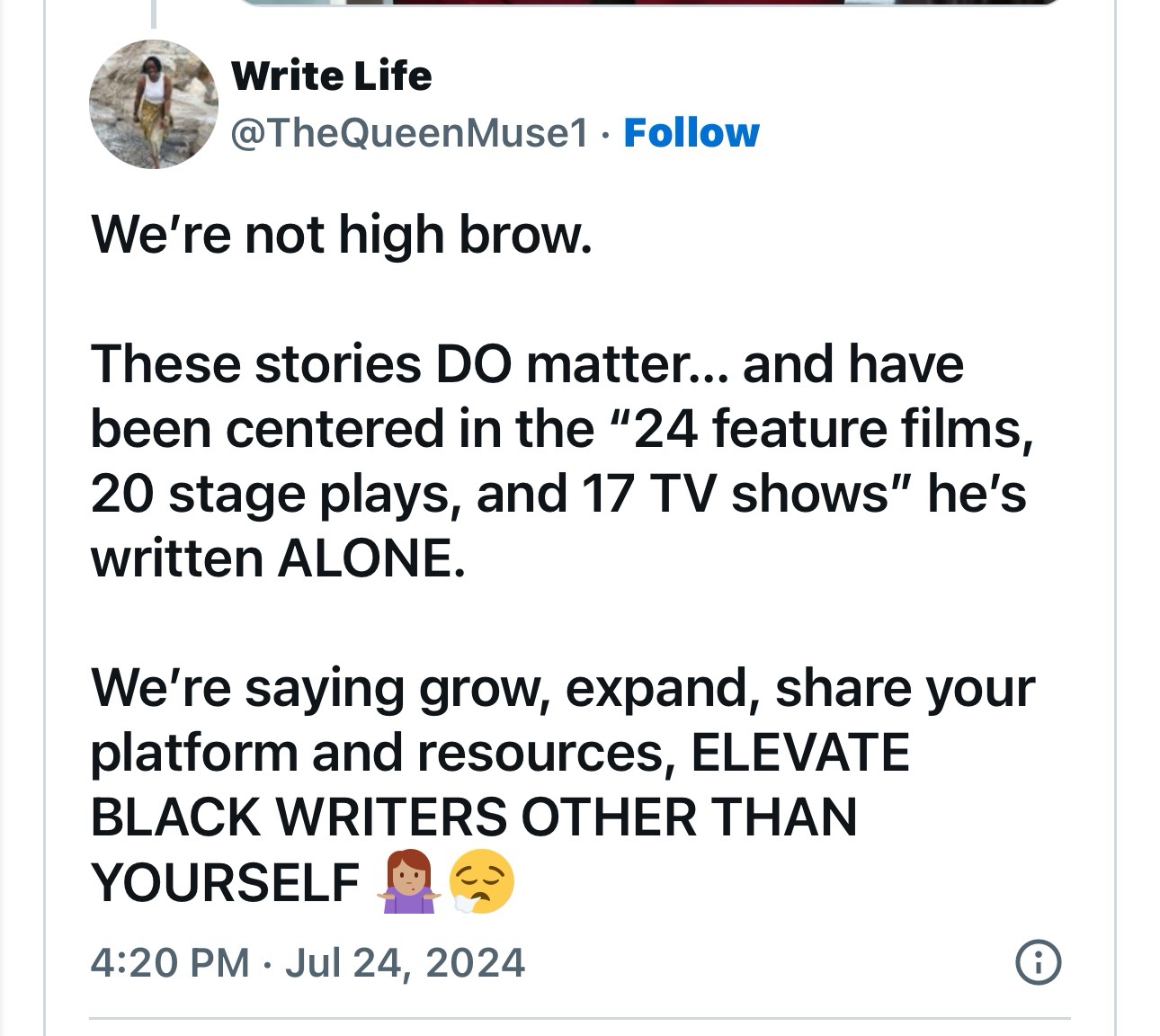
Tyler Perry doesn’t care what his critics say about his Movies!

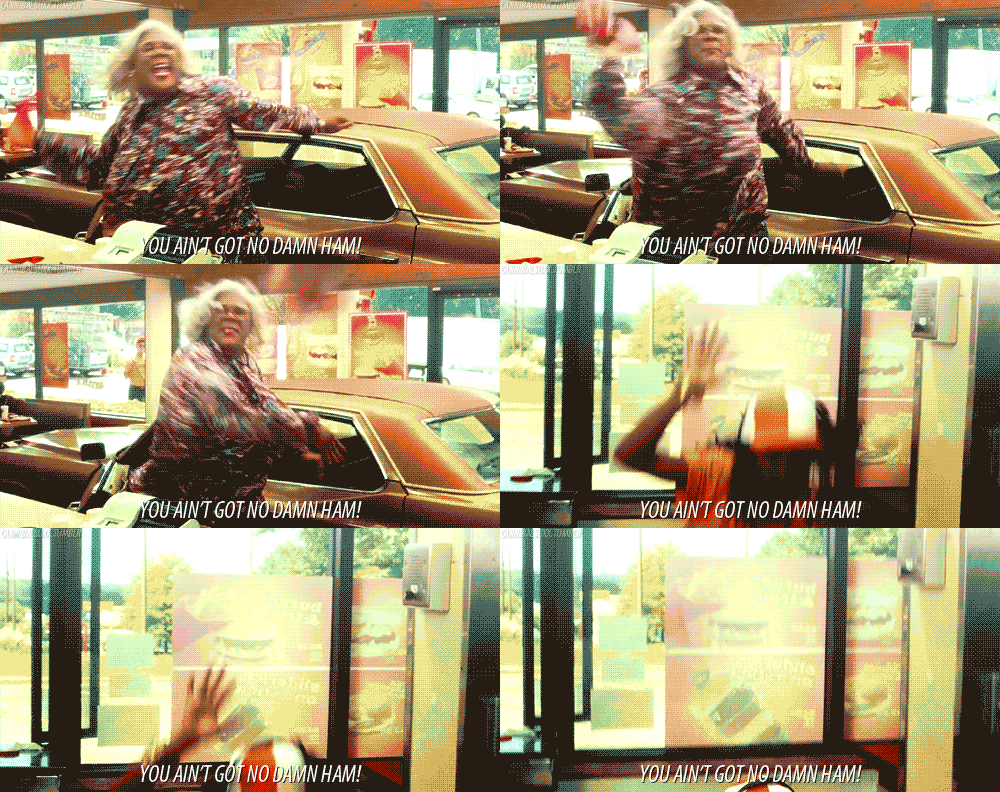
Many of Tyler Perry’s characters are abused or have been abused.
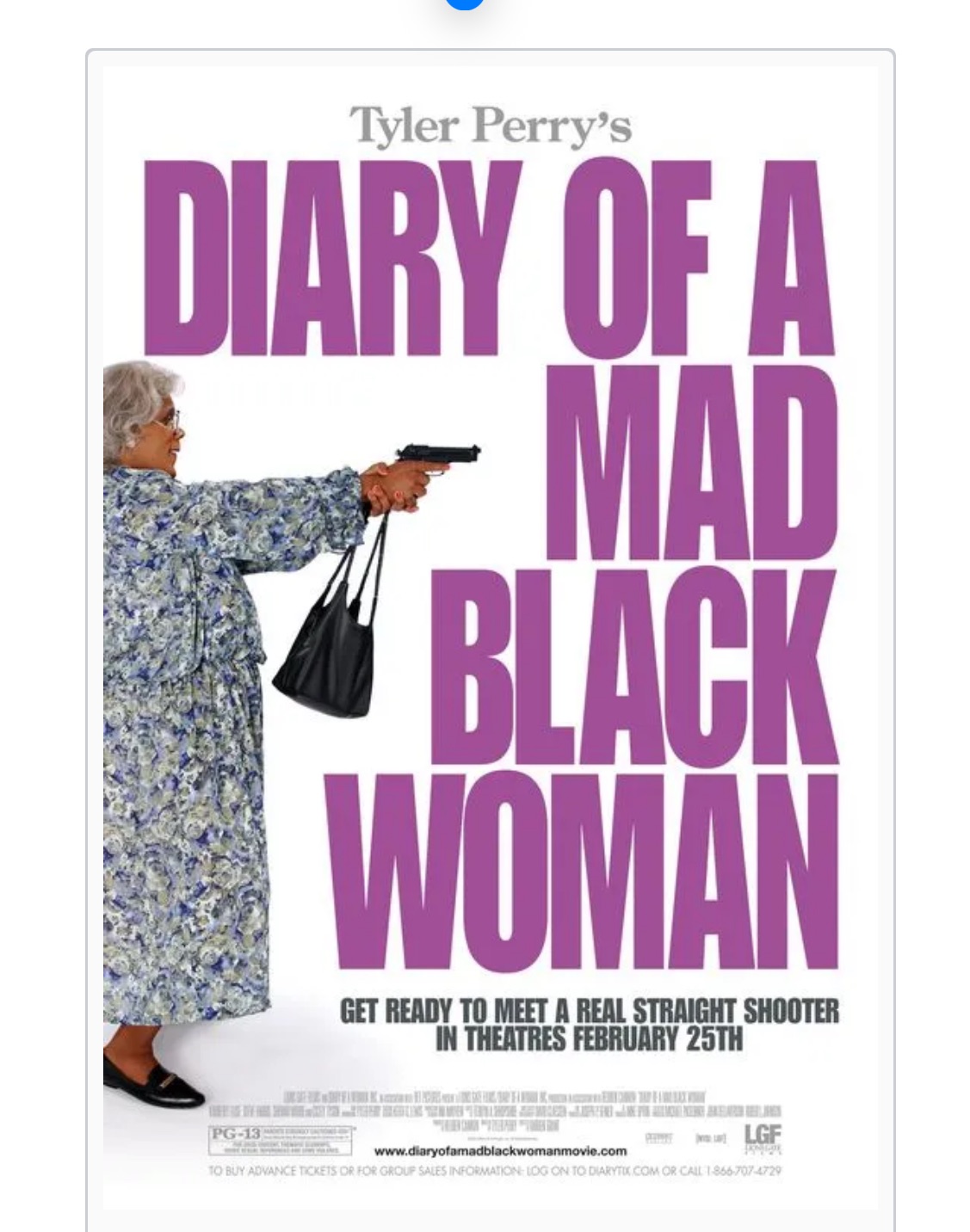
“Yet the first half-dozen films are not about Madea at all, and their repetitious stories can feel something like a round of black-pathology Mad Libs. In each, an untrusting woman damaged by past abuse-often from a well-to-do-man-forced to come into her own and along the way meets a handsome blue-collar man whom she is not at first open to (Diary of a Mad Black woman, Madea’s Family Reunion, Meet the Browns). She has been raped (Madea’s Family Reunion, Madea Goes to Jail), emotionally abused (Diary of a Mad Black Woman, Madea’s, Meet the Brown’s, I Can Do Bad All by Myself) or has had her children neglected by an uncaring baby daddy (Meet the Browns). This long-suffering “good man” wants her no matter how many children she has, or whether she is on drugs, or how poorly she treats him (Ford, 2012).
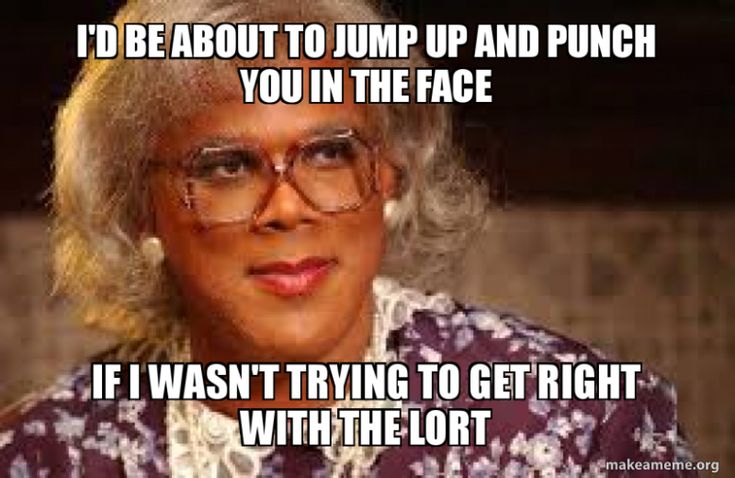
Madea and her characters are LOUD & CRAZY Black females


A study done by Brianna Mckoy: Tyler Perry and the Weight of Misrepresentation, is a study of typecasting and stereotypical role portrayal in black film production. Examining and defining stereotyping black women in film was studied. The Results were:
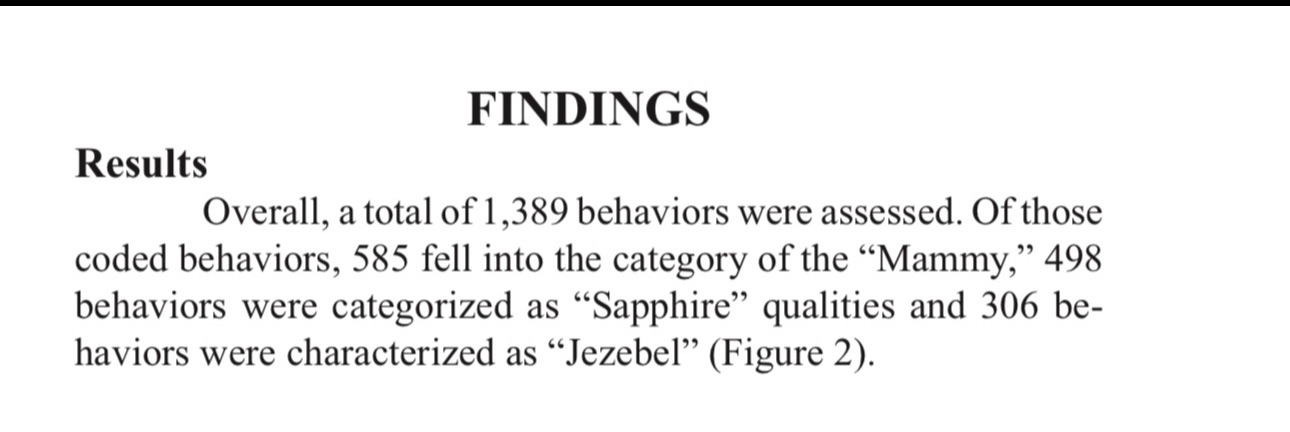
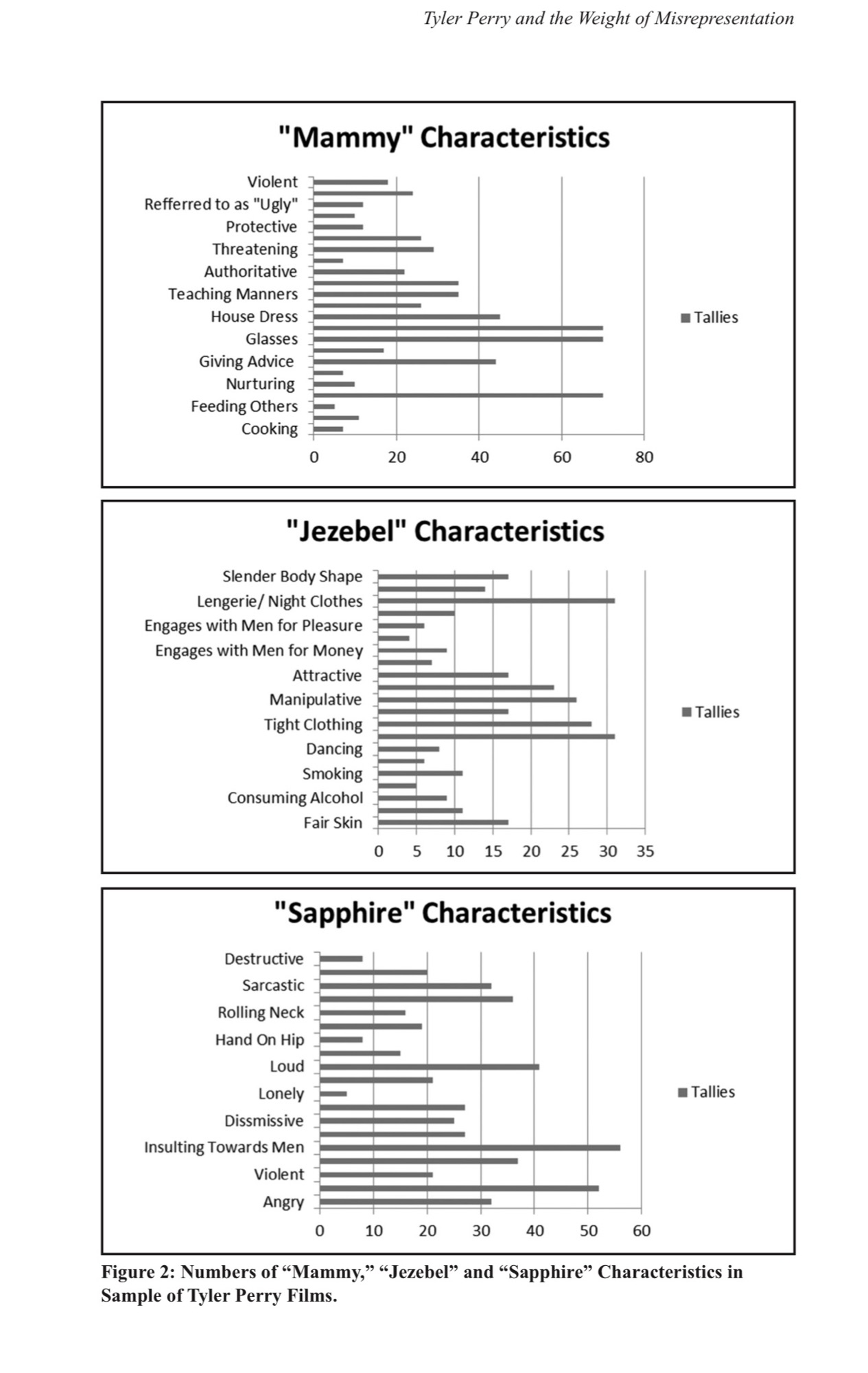
McKoy says there are many consequences of black female representation in films that they are subjected to. “In the domain of media roles, the way blackness is framed in society has a lot to do with the portrayal of African American stereotypes in feature films.”
“The problem with stereotypes such as “Mammy,” Jezebel” and Sapphire is that they embody more negative and narrow depictions of blacks (black culture) than occur in reality for blacks or for whites (Branthwaite and Peirce, 1990).
STEREOTYPES OF BLACK FEMALE CHARACTERS IN MADEA MOVIES:
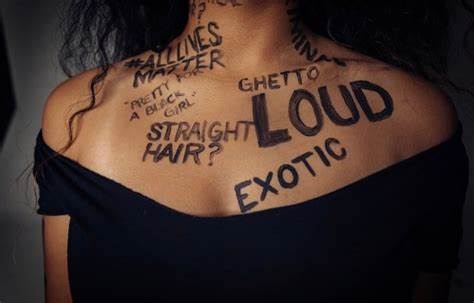


Madea Tropes:
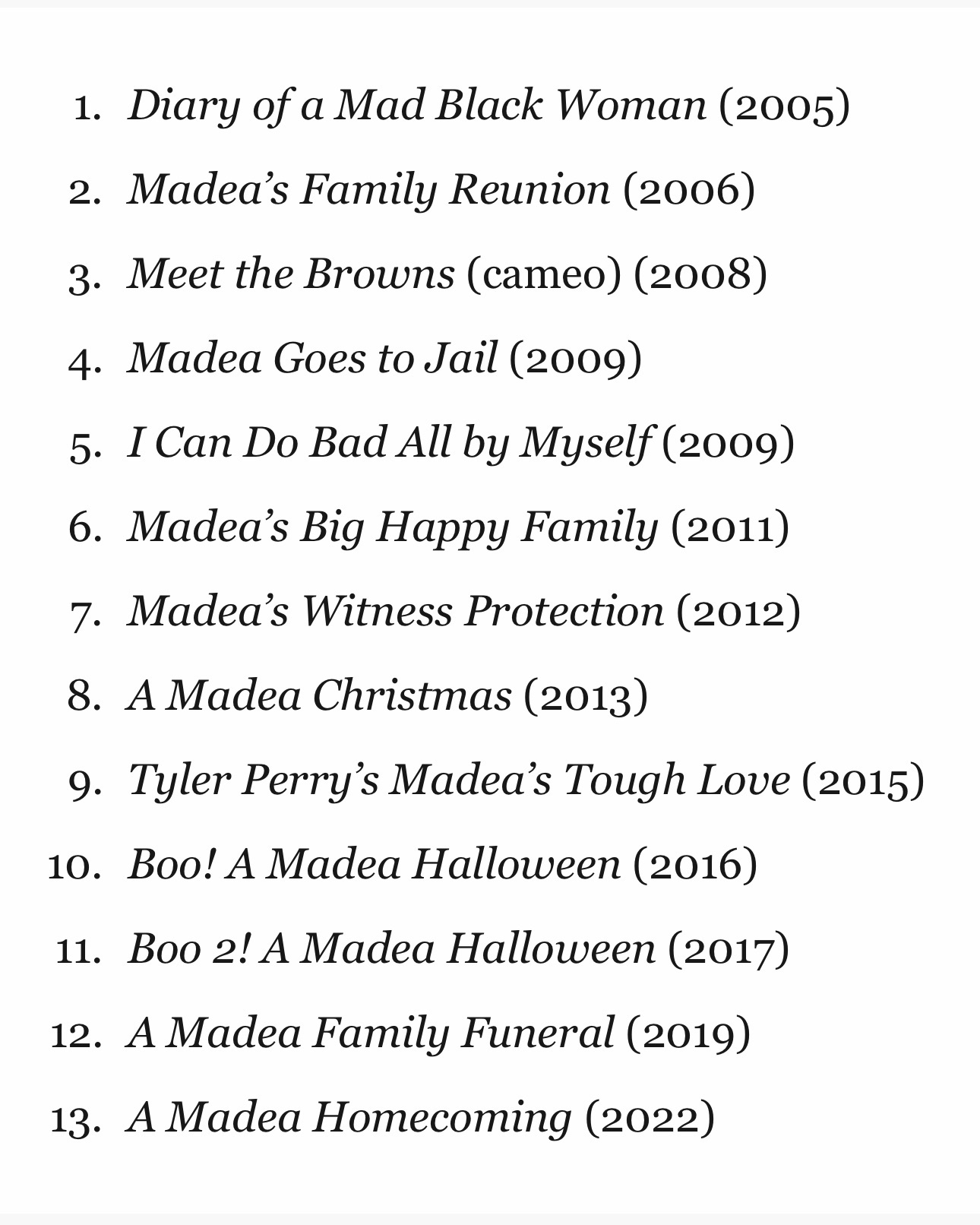
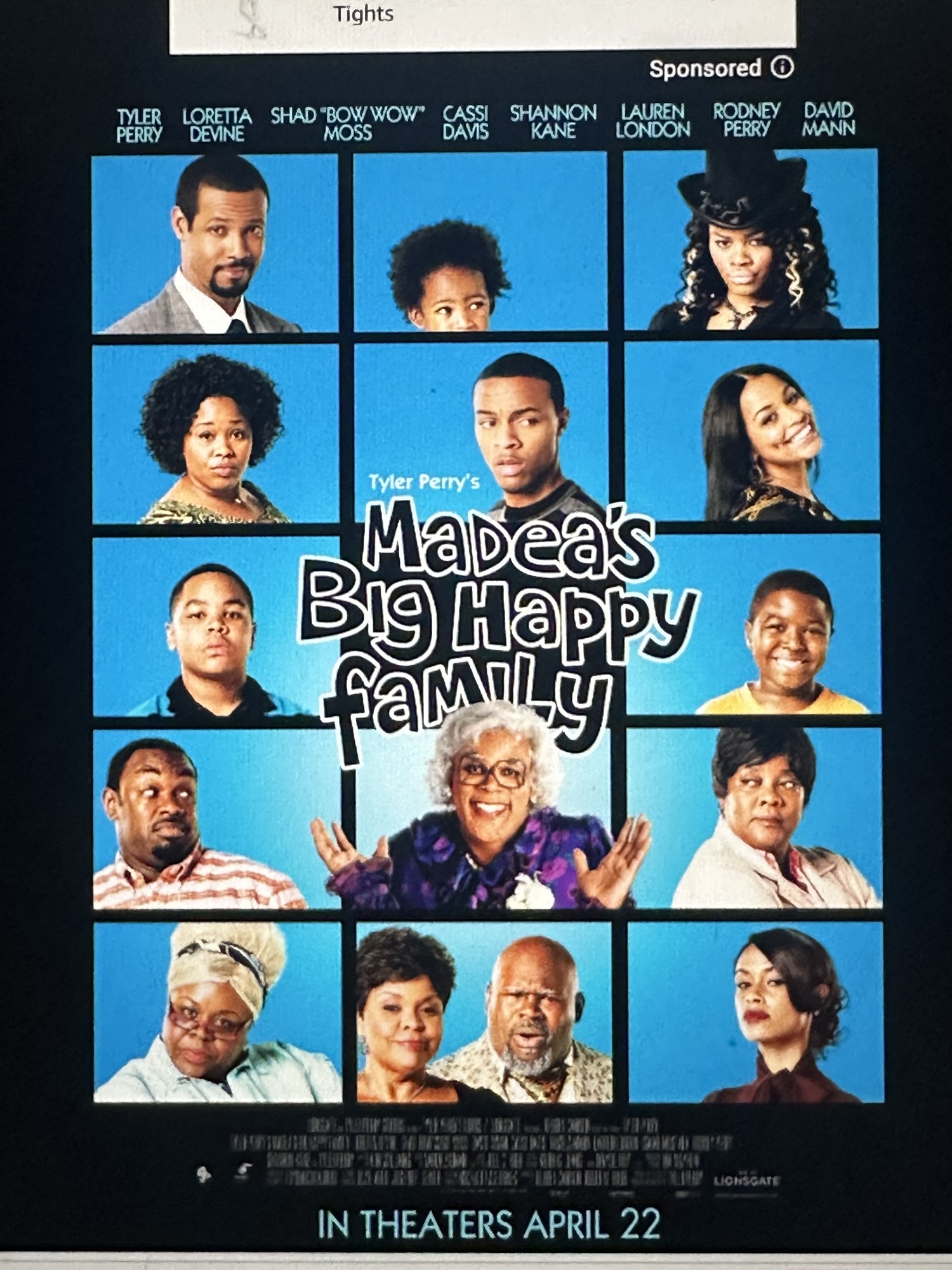
LIST OF TYLER PERRY MADEA MOVIES:
MANY OF CHARACTERS IN MADEA MOVIES ARE DRUG ADDICTS, CRIMINALS AND PROSTITUTES.

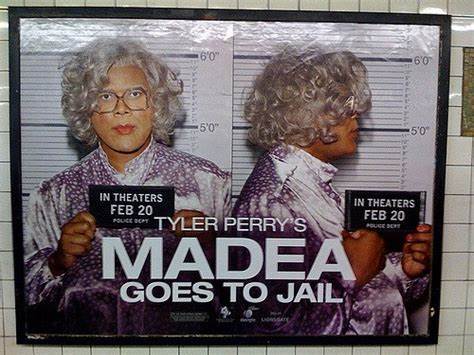
According to Mitchell Faust of the University of Texas “I make the argument that while ostensibly representing the “angry black woman” stereotype, Madea’s characterization and actions within the film represent strategies and efforts to not be contained within hegemonic ideals of black female respectability politics and the law efforts to put her behind bars. By “bringing wreck”, Madea’s fictional acts of violence and talking back are read as a strategy that reflects a historical trend of misrecognition that renders black women’s concerns and discontent with marginalization as irrational anger” in regard to Madea Goes To Jail film.
While Tyler Perry’s Madea Tropes are entertaining, the representation of the black female characterization in these films are a misrepresentation and stereotypical of black females. The stereotypes being portrayed in the Madea tropes are not positive or empowering, it does show struggles that some black women may have to combat but this could be anyone-not only black females.
References
Bennett, J. (2024, July 24). Tyler Perry Dismisses “Highbrow Negroes” Criticizing His Films: “Get Out Of Here With That Bullsh*t” “Who are you to be able to say which Black story is important, or should be told?” Vibe.com https://www.vibe.com/news/entertainment/tyler-perry-dismisses-highbrow-negroes-criticizing-films-1234897832/
Carey, T. L. (2014). Take your place: Rhetorical healing and black womanhood in Tyler Perry’s films. https://www.journals.uchicago.edu/doi/abs/10.1086/675546
Faust, M. R. (2014, May 5). “Are you getting angry Doctor?” : Madea, strategy and the fictional rejection of black female containment. University of Texas Libraries. https://repositories.lib.utexas.edu/items/b21695b0-97ef-465a-b790-d79257316023
Ford, T. (2012, June 28). Tyler Perry’s mammy gets less melodramatic but not less grotesque. RIVERFRONTTIMES.COM. https://www.riverfronttimes.com/movies-tv/tyler-perrys-mammy-gets-less-melodramatic-but-not-less-grotesque-2500468
Thapa, S. (2023, March 28). Diary Of A Mad Black Woman Cast & Character Guide. SCREENRANT. https://screenrant.com/diary-mad-black-woman-cast-character-guide/
McKoy, B. (2012). “Tyler Perry and The Weight of Misrepresentation,” McNair Scholars Research Journal: Vol. 5, Article 10. Available at: https://commons.emich.edu/mcnair/vol5/iss1/10/
 Melissa's Blog